aemi & Cork International Film Festival present: HARD CURRENCY
Friday November 13th | Granary Theatre | 17.45pm | 80 minutes
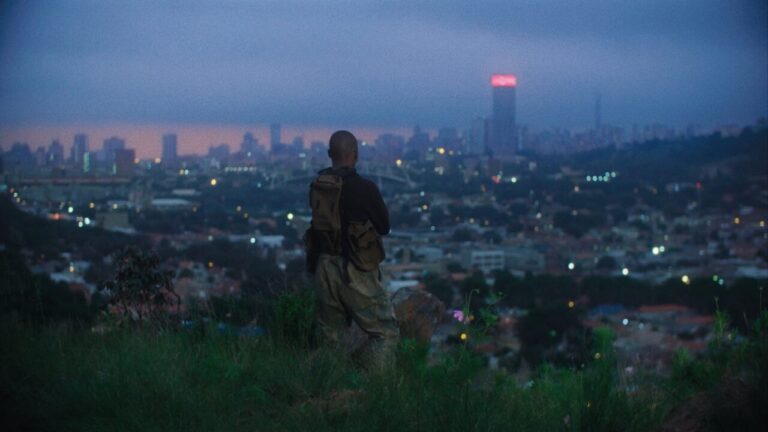
Curated by aemi to take place at the Granary Theatre as part of this year’s edition of Cork International Film Festival, ‘HARD CURRENCY’ is an international mixed shorts programme building out abstractly from Tuva Björk’s Fear Fokol (2025), a dark journey into the world of private security in South Africa. Exploring ideas of threshold and familiarity as well as states of light and projection, HARD CURRENCY considers instances when a desire for comfort slips into anxiety and a fear of the outside/r. Moving in and out of the factual to make space for the ethereal, the performative and the cinematic this programme also features extraordinary new and existing works by Anouk De Clercq, Viktoria Schmid, Laida Lertxundi, Niko Wei and Fairuz Ghammam.
FILM INFO:
Fear Fokol, Tuva Björk, Sweden, Ireland, 2025, 15 minutes
We’ll find you when the sun goes black, Anouk De Clercq, Belgium, Norway, 2021, 5 minutes
Leaving Light, Viktoria Schmid, Austria, 2026, 3 minutes
A Proposal to project in Scope, Viktoria Schmid, Austria, 2020, 8 minutes
Title, Laida Lertxundi, France, Spain, United Kingdom, 2026, 19 minutes
Cultuur, Fairuz Ghammam, Belgium, 2022, 14 minutes
Maman, Niko Wei, Belgium, 2025, 15 minutes


FILM SYNOPSES:
Fear Fokol, Tuva Björk
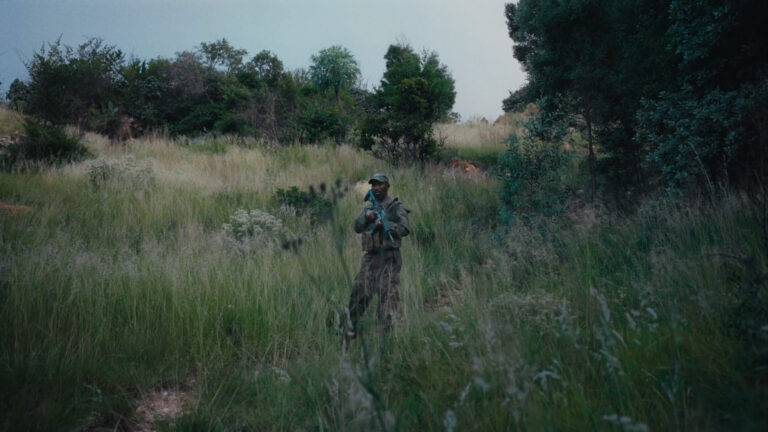
‘Tuva Björk’s short documentary opens with a private-security officer offering a litany of the weapons he has with him in his car, recounted with a pride that borders on glee… Private-security work is big business in Johannesburg—of the sixty-three million people who live in South Africa, almost three million work in private security. Björk’s film follows several of them as they guard residential areas and even patrol some public spaces… [This film ] raises the question of how people achieve the feeling of security, and of who gets to feel truly safe’. – The New Yorker, October 7, 2026
We’ll find you when the sun goes black, Anouk De Clercq
Inspired by the “terella”, a small magnetised model ball representing the Earth, used by scientists to investigate the aurora until the late 20th century, and by a Bertolt Brecht poem, written in exile in the 1930s : “In the dark times / Will there also be singing? Yes, there will also be singing / About the dark times.”
Leaving Light, Viktoria Schmid
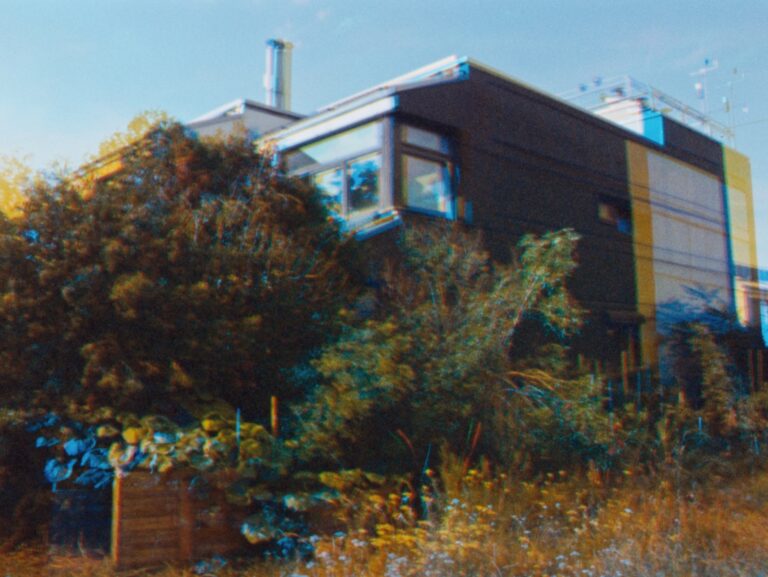
‘Using successive in-camera exposures of her former studio, Viktoria Schmid transforms light into a quietly shifting field of colour and duration, where each frame holds multiple moments at once. The result is a poignant exploration of the mutable nature of the photographic image, revealing the gradual passage of time’ – Hyun Jin Cho
A Proposal to project in Scope, Viktoria Schmid
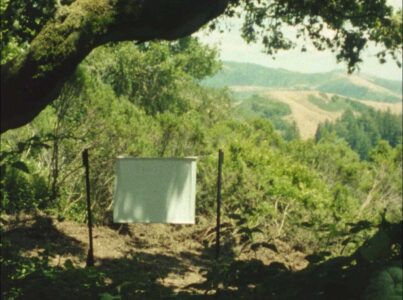
The 35mm CinemaScope format is pre-eminently suited to landscapes. Viktoria Schmid puts the surroundings out of frame, turning the screen into a sculpture in the dunes. Widescreen emptiness becomes a projection surface for an interplay between light and shadow, sun and trees.
Title, Laida Lertxundi
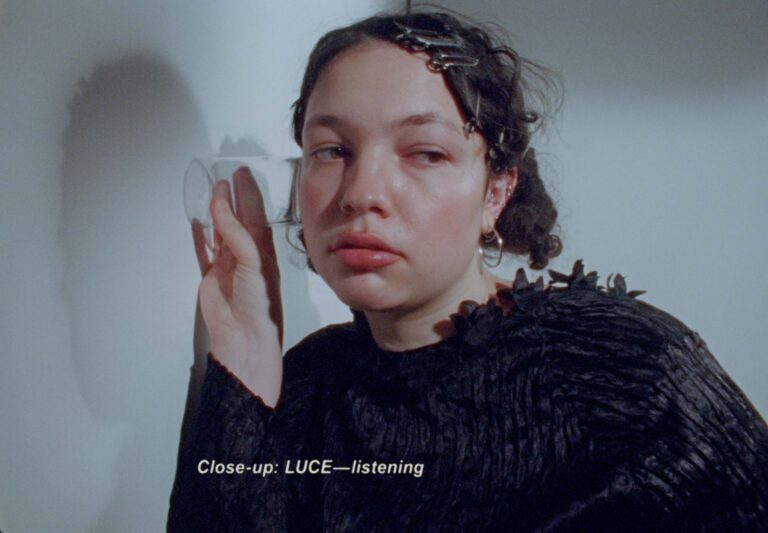
Inspired by John Baldessari’s 1973 short film, Title breaks down narrative cinema into a gamelike diagram of gestures, soundtracks, pickup shots, subtitles, and B-movie dialogue. Shot with students and friends across Paris, Lyon, London, and Menorca, the film stages a playful confrontation with 1960s and 70s formalism and conceptual art, reinterpreting it with new words, bodies and relationships. Shot and recorded in: Lyon, Mont d’Or and Paris, France; London, United Kingdom, Menorca, Spain
Cultuur, Fairuz Ghammam
Belgian filmmaker and cinematographer Fairuz Ghammam’s warm, generous work explores aspects of (auto)biography, shared authorship, and collaborative practices. Staged as a walk through her hometown, Kortrijk, Culture riffs on these themes, sewing kernels of family history through a narrative, and a gaze, that oscillates between private and public space. How many memories and storylines can coexist?
Maman, Niko Wei
Maman, is a documentary in the form of a love letter from a son to his mother. What begins as an attempt to tell her story – from how she, at the age of seven, moved from her hometown of Likasi to Brussels and as an act of rebellion didn’t speak for one year to her lifelong dream of being a photographer – slowly transforms into something else. The film is built around her voice, recorded as she reads the letter aloud for the first time. That single, intimate recording became the voice-over of the film.